After 31 acquisitions in the last two years, Oracle's tornado-like swath through the software industry continues, with no end in sight. But the company's best acquisition of all was the most surprising--hiring a gifted Morgan Stanley software analyst who has transformed, remarkably, into a powerful executive with a golden customer touch.

|  |
 We aren't afraid to do something different because that's how you change the game," says Phillips
 Photo by Kim Kulish |
 |
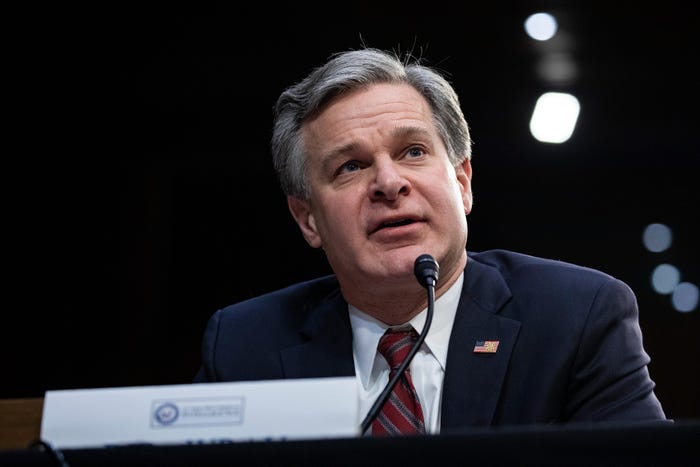
Larry Ellison took a risk when he plucked Chuck Phillips off Wall Street and made him into Charles Phillips, Oracle president. In the three years since, Phillips has emerged as Oracle's front man, constantly on the road, fulfilling the dual jobs of acquisition executor and customer advocate. Phillips' performance has been spot on: The company's revenue, profit, and stock price have risen steadily.
It's too early to call Oracle's strategy a slam-dunk success. Whether it's simply the minor fall-out that comes with a hugely ambitious undertaking, or indications of something more serious, Oracle has left more than a few disgruntled customers in its wake. There's also the question of how much stress Oracle's operations can withstand from the constant assimilation of new companies. Can Phillips hold it together, or will he and other Oracle execs bail out at the first sign of financial slippage?
To his credit, Phillips has gained the trust of the Oracle user community, despite little management experience. He's turned many of those who were once wary of Oracle's moves to snap up PeopleSoft, Siebel, Hyperion, and dozens of other companies into believers. "If you looked at the past 10 years and picked one executive who has really excelled in the IT business, it has to be Charles," says customer Ralph Szygenda, CIO of General Motors. "He listens. He addresses problems."
So far, so good. But one of the main reasons Oracle's strategy works is because the company hasn't forced customers off acquired platforms, choosing to bear the cost of supporting and improving overlapping products, including several different ERP suites. A worst-case scenario, speculates Szygenda, might involve a few quarters in which Oracle doesn't meet its numbers, forcing the software company into cost-cutting mode. "So, is there continuity to this strategy? That's my question," Szygenda says. "It feels good, but will it feel good two years from now?"
GOING ON ALL CYLINDERS
Phillips' old rivals on Wall Street are smiling on Oracle. On June 28, two days after its strong fourth-quarter earnings report, Oracle's stock hit $20 a share for the first time in five years. Oracle promised investors it would deliver an average 20% growth rate with its acquisition strategy, Phillips says, and that's happening. Profits were up 26% to $4.27 billion in the fiscal year ended May 31, new software licenses climbed 20% to $5.88 billion, and revenue jumped 25% to $18 billion. CFO Safra Catz, during a conference call with analysts, said Oracle was "going on all cylinders," and expected to increase software license revenue by another 20% to 30% in the current quarter, typically its slowest of the year.
If Phillips faces any problems with Oracle's acquisition plan, he's not telling. The company has "well-developed processes" for bringing companies quickly and efficiently into its fold, he says by e-mail. "We aren't afraid to do something different because that's how you change the game," he adds. "Customers now recognize that Oracle acquiring a product is a very good thing for them."
Well, not everyone. According to an
InformationWeek survey conducted earlier this month, only 16% of the 375 business technology execs responding--226 of whom were Oracle customers--say Oracle's acquisition strategy is good for the software industry. Among customers, just 15% say they've benefited from Oracle's acquisitions by not having as many vendor relationships to manage, and 53% cite no improvement. And while three-quarters of Oracle's customers say they're unaffected by, hopeful about, or pleased with their relationships with Oracle and the companies it's acquired, a fourth are worried or displeased.
Robert Geller, CIO of XO Communications, is among the displeased. Geller, whose company licenses at least $1 million in new Oracle products a year and pays more than $7 million in annual maintenance, sees a company obsessed with increasing license and maintenance revenue at any cost. He draws a parallel between the new Oracle and the old Computer Associates (now CA), which was infamous for acquiring companies for the maintenance revenue and largely ignoring the support needs of those companies' customers. "It's gotten to the point where I would call some of [Oracle's] practices unscrupulous," Geller says.
For example, Geller recently agreed to an Oracle software audit on an Oracle rep's advice that it would likely provide cost savings for XO Communications. Instead, Geller was hit with a bill for $800,000 in maintenance charges. Convinced the audit was inaccurate, Geller got the fees dropped, but only after taking the matter to an Oracle VP.
In another instance, Geller says he contacted Hyperion to negotiate an upgrade and maintenance contract for his company's growing use of its Brio business intelligence software. Soon after, Oracle announced it was acquiring Hyperion, and not long after that an Oracle rep called saying its records showed Geller had more employees using Brio than XO was paying for. Geller again believed his own math over Oracle's and refused to pay additional license fees. Oracle responded with a breach-of-contract notice. Infuriated, Geller took negotiations on $1.5 million worth of new Oracle software off the table, telling Oracle, "My people can't talk to your people because we may be involved in litigation." Oracle higher-ups again ironed out the issue, but Geller has since challenged them to pay a visit to try to "reset the relationship."
Phillips then got involved, and it appears discussions are finally on the right path, but Geller's trust in Oracle has been broken. When conducting due diligence on potential vendors, Geller poses a question: How will you avoid being acquired by Oracle?
BRAIN TRUST
While Phillips' star is rising, there's no question who's running the show. CEO Ellison, who was racing his yacht in the America's Cup as Oracle wrapped up its fiscal year, could write a book on how to enjoy an extraordinary personal life while maintaining tight-fisted control over a company. Yet, Ellison's grip is loosening as Phillips and CFO Catz (also an Oracle president) gain influence. "We all play a role and make each other smarter," Phillips says. "It's about winning."
Phillips often holds court over Oracle's 20-member CIO advisory council meetings, deftly handling questions about acquisitions, integration, support, and products, notes council member Barry Libenson, CIO at Ingersoll Rand. "Charles is generally familiar with what his customers use," Libenson says, describing Phillips as "unflappable" in front of a group of testy CIOs. "You get the sense he's capturing what you're saying and will make it actionable."

|  |
 Three's company: Oracle's power troika of president Phillips, CEO Ellison, and CFO Catz. Phillips seems most likely to take the top spot if Ellison retires any time soon.
 Photo by Kim Kulish |
 |
Phillips' no-nonsense demeanor stems from a military upbringing. His father, Charles Sr., served 20 years in the Air Force, and Phillips followed in his footsteps, earning an undergraduate degree in computer science at the U.S. Air Force Academy. He joined the Marines, achieved the rank of captain, and got an MBA from Hampton University in 1986, followed by a law degree from New York Law School in 1993. He ended up on Wall Street, with stints at several investment firms before landing at Morgan Stanley, becoming a star financial analyst of the enterprise software industry and a managing director at the firm.
Ellison hired Phillips in 2003 as Oracle's VP of corporate strategy to help fulfill Ellison's goal of becoming the world's largest software company. Phillips had an insider's view of the software industry that even Ellison himself would have a hard time matching: As a numbers-crunching analyst who could influence a software company's stock, Phillips attended financial briefings by Oracle competitors regularly and had the clout to get CFOs on the phone to answer his questions.
Known as "Chuck" on Wall Street, the Redwood Shores crowd began referring to Oracle's new power broker by his more formal first name, Charles. Why? There was already one Chuck on the executive team reporting to Ellison--Chuck Rozwat, executive VP of server technologies--and it was too confusing to have a second one, explains an Oracle spokeswoman. But the transition from Chuck to Charles has entailed more than that. Once easily accessible to the media, interviews with Phillips are much fewer and far between.
If money talks, it appears Ellison is pleased with Phillips' performance. His bonus jumped from $280,000 in 2004 to $2.82 million in 2005, right after Oracle named Phillips and Catz co-presidents, then to $3.78 million in fiscal 2007. With a total cash and stock compensation package of $19 million in fiscal 2007, Phillips, at 48, is one of the highest-paid non-CEO executives in Silicon Valley.
Earlier this month, Phillips introduced Oracle 11g, the first major upgrade to the company's flagship database in four years. What's sometimes lost in all the acquisition hoopla is that databases and middleware are still the largest part of Oracle's business--generating $7.99 billion in revenue in fiscal 2007, compared with $3.56 billion in application sales. Apps, however, are growing faster for Oracle, with new licenses climbing 66% and maintenance jumping 75%, compared with single-digit growth in databases and middleware.
Oracle faces increasing competition from Microsoft's lower-cost SQL Server database, but Oracle still rakes in nearly half of all database sales, well ahead of IBM or Microsoft. Databases and middleware play a critical role in Ellison's vision of industry domination. Companies can come to Oracle for the entire software stack--databases, apps, and the middleware that ties them all together. That's something SAP, lacking its own database, can't claim. Microsoft's got middleware and database software, but its Dynamics ERP suite, focused on small and midsize businesses, can't match Oracle at the high end. IBM doesn't have the applications.
Oracle's most ambitious software project is its in-development Fusion suite, intended to combine the best of Oracle technologies. The first release of Fusion, due late next year, will comprise human resources, payroll, and supply chain software. Oracle execs talk about Fusion 1.0 almost like it's an experiment. "All of our customers can look at it and start deciding how and if they want to move to it," says senior VP John Wookey, who heads up application development and integration. Phillips says that "many will stay with PeopleSoft, Oracle EBS, Siebel, and JD Edwards, and that's fine with us."
Oracle had better be patient. Only 13% of its customers will evaluate and consider an upgrade to Fusion by 2010, according to our survey. The majority, 35%, say they're interested in Fusion but not likely to upgrade by 2010. And two out of 10 Oracle ERP customers have no plans for Fusion at all--they'll stay with their existing apps for as long as they can.
But how long can Oracle continue to develop and support overlapping product lines? The company isn't talking about its plans beyond the next few years, so it's unclear how or if it will consolidate its various ERP product lines beyond what it's doing with Fusion. That's because the technological feat of integrating Oracle's jumble of software, representing many different code bases, is nearly impossible, says analyst Josh Greenbaum of Enterprise Applications Consulting. In April, Oracle began offering its Application Integration Architecture, software that customers can use to stitch together its disparate apps. However, Greenbaum expects the complexity of mixing and matching Oracle's software to drive some potential customers away--and into the arms of SAP.
Web 2.0--with its online applications and mashup integration approach--represents an unconventional twist to the Oracle way, too. Says Greenbaum, "Oracle is building a complete application infrastructure at a time when the industry is trying to be more simple."
WHERE IS ORACLE HEADED?
Questions persist about both Oracle's acquisitions and its follow-through.
Daniel Lubin, director of IT at medical device company Abiomed, chose SAP over Oracle because of what he saw as SAP's better functionality and understanding of business processes. "Oracle's R&D spend is fragmented compared to SAP's," Lubin says. "That's not to say they don't have great products, but we still don't understand where Oracle is headed."
Last fall, Dow Corning replaced Siebel with SAP's CRM software. Many of the reasons were functional--better reporting, better integration with other SAP systems it has--but those weren't the only ones, says Chip Reeves, Dow Corning's director of marketing and sales processes. Dow Corning's relationship with Siebel changed after the Oracle acquisition. "I don't know what happened to my direct seller; I never saw him again," says Reeves. "I did receive standard letters from Oracle that had 'don't worry, everything is all right' kind of messages. But I don't recall having a personal interaction with anyone after the acquisition."
At the same time, Oracle has its share of true believers. "They're doing great things for us, bringing together in the applications world all the best under one roof," says David Rudzinsky, CIO of Hologic, a $700 million-a-year medical device maker that uses PeopleSoft, Siebel, and other Oracle products.
Rudzinsky wasn't always so high on Oracle. "We grew up in the IT industry hating the fact that a few guys controlled our future direction," he says. "Oracle was one of the large companies you feared doing business with." But Phillips helped change things. "They're working closer with user groups and showing up at the meetings," says Rudzinsky, adding that Phillips seems genuinely interested in how things are going for him.
There's another change under way at Oracle: It's shifting to a business process, vertical-industry orientation, one less focused on what Phillips calls "general ledger" ERP and more on specific industries. For that reason, Phillips says he's not so concerned with trying to convince companies long standardized on and invested in SAP to move over to Oracle. "ERP is but one component of the enterprise application market," he says.
Oracle wants to be the leader in such areas as communications billing, utility billing, and core banking. "We're going to expand the number of vertical industries where we have industry-specific applications and we're going to do that via acquisition," Ellison said in a recent conference call with analysts. Not only is that a market opportunity in itself, but it leads to other, bigger opportunities. "We have found that these industry applications are so strategic, that customers will often give us the back-office, administrative applications if we are providing the line-of-business applications," Phillips says.
So far, Ellison's gamble on Phillips is paying off handsomely. Somewhere in the financial analyst he saw a talent for strong customer skills and a keen appreciation for technology's potential. Without those, Oracle's acquisition strategy wouldn't have been as successful. The degree to which Ellison's bet pays off in the long run will depend on how well Phillips keeps the momentum going.
-- with Charles Babcock
Continue to the sidebar:
Q&A: Oracle's President Charles Phillips